Jan 5, 2026
Jan 5, 2026
Jan 5, 2026
How Do I Avoid Alert Fatigue with AI Search Optimization/GEO Platforms?
How Do I Avoid Alert Fatigue with AI Search Optimization/GEO Platforms?
How Do I Avoid Alert Fatigue with AI Search Optimization/GEO Platforms?

Siddhant Paliwal
CTO, Bear
In This Article
How Do I Avoid Alert Fatigue with AI Search Optimization/GEO Platforms?
Share on
How Do I Avoid Alert Fatigue with AI Search Optimization/GEO Platforms?
TL;DR: As businesses adapt to AI search engines like ChatGPT and Google AI Overviews, marketing and SEO teams are drowning in a sea of alerts. This “alert fatigue” leads to missed opportunities, team burnout, and a failure to capitalize on AI-driven visibility. The solution isn’t more monitoring, but smarter monitoring. By consolidating tools, leveraging deep source analytics, and focusing on revenue-generating insights, you can cut through the noise. Platforms like Bear AI are specifically designed to solve this problem, providing a unified system to track what matters and ignore what doesn’t.
The New Normal: Drowning in AI Search Alerts
The world of search is undergoing its most significant transformation in decades. With AI-powered platforms like ChatGPT processing billions of queries daily and Google’s AI Overviews reshaping search results for a massive user base, the need for brands to monitor their visibility has never been more critical. An estimated 2 billion monthly users now engage with AI Overviews globally, and ChatGPT commands a staggering 81% of the AI chatbot market. For any Head of SEO or VP of Sales, being present in these conversations is no longer optional—it’s essential.
However, this new frontier of Generative Engine Optimization (GEO) and Answer Engine Optimization (AEO) has created an unforeseen challenge: a relentless flood of notifications. Teams are deploying multiple tools to track brand mentions, keyword performance, and source citations across a growing number of AI platforms. The result is a constant barrage of alerts that, instead of empowering teams, is overwhelming them. This phenomenon, known as alert fatigue, is causing skilled professionals to become desensitized to the very information meant to guide their strategy, leading to missed critical insights and significant business costs.
What is Alert Fatigue in the Age of AI Search?
Alert fatigue is a state of mental and operational exhaustion caused by an overwhelming number of notifications, many of which are low-priority, irrelevant, or false positives. In the context of AI search monitoring, it occurs when SEO and marketing professionals are so inundated with data about their brand’s performance on platforms like Perplexity and ChatGPT that they begin to tune it out. The sheer volume makes it impossible to distinguish between a minor mention and a major lead-generating opportunity.
A primary driver of this fatigue is the prevalence of false positives. According to a comprehensive 2022 report on alert fatigue by Orca Security, a staggering 81% of IT professionals report that more than one-fifth of their alerts are false positives, with 43% stating that the number is over 40%. When teams learn that a significant portion of their alerts requires no action, they naturally start to ignore them. This cognitive desensitization means that when a truly critical alert does appear—such as a negative brand mention in a widely seen AI Overview or a competitor capturing a key conversational query—it’s likely to be missed.
Why Alert Fatigue is Intensifying with GEO and AEO
The problem of alert fatigue isn’t new, but it has been amplified by the unique complexities of the AI search ecosystem. Unlike traditional SEO, where monitoring was largely centralized around a few key search engines, AEO requires tracking a diverse and expanding landscape of platforms, each with its own algorithm and citation patterns.
This leads to several key issues:
Tool Sprawl: The Orca Security report found that 57% of organizations use five or more security tools. A similar trend is emerging in AI search monitoring, with companies using separate tools for ChatGPT, Google AI Overviews, and Perplexity. This fragmentation means alerts are coming from multiple, disconnected dashboards, creating chaos and preventing a unified view of performance.
Extreme Alert Volume: The scale of AI-generated content is immense. The same report revealed that 59% of respondents receive more than 500 alerts per day, and 38% are hit with over 1,000. It is humanly impossible to meaningfully analyze this volume of data, forcing teams into a reactive and inefficient workflow.
Lack of Context: Most basic monitoring tools simply report that a brand was mentioned. They don’t provide the necessary context. Was it a fleeting mention in a low-traffic answer, or was your brand cited as the primary source for a high-intent query? Without this context, every alert carries the same perceived weight, making prioritization impossible.
The Real Cost of Doing Nothing
Allowing alert fatigue to fester within your organization is not a passive problem; it has active, detrimental consequences that directly impact revenue and growth. The cost extends far beyond a frustrated marketing team.
When critical alerts are missed—an event that 55% of teams admit happens due to ineffective prioritization—the business suffers. A competitor might be cited as the top solution for a key problem your product solves, and you won’t know until the opportunity is lost. A negative or inaccurate statement about your brand could be served to millions of users in an AI Overview, damaging your reputation without your knowledge. Furthermore, the constant stress and feeling of ineffectiveness take a toll on your most valuable asset: your people. The Orca Security study found that 62% of companies say alert fatigue has directly contributed to employee turnover. Replacing experienced SEO and marketing professionals is costly and disruptive, and it perpetuates a cycle of burnout.
6 Actionable Strategies to Combat Alert Fatigue
Escaping the cycle of alert fatigue requires a strategic shift from broad, noisy monitoring to a focused, intelligent approach. Here are six strategies to regain control and turn your AI search monitoring into a revenue-generating asset.
1. Consolidate Your Monitoring into a Single Platform
The first step is to eliminate tool sprawl. Juggling multiple platforms for ChatGPT, Google AI Overviews, and Perplexity is a recipe for disaster. A unified platform that tracks your visibility across all major AI search engines provides a single source of truth, dramatically reducing the cognitive load on your team and ensuring no insights fall through the cracks.
2. Implement Deep Source Analytics
Don’t just track mentions; track the sources behind them. AEO is not about getting mentioned everywhere, but about getting cited by authoritative sources that AI engines trust. Deep source analytics tells you which Reddit threads, Wikipedia articles, YouTube videos, and blog posts are driving your visibility. This allows you to focus your content and outreach efforts on what’s already working, rather than guessing.
3. Prioritize Alerts Based on Business Impact
Not all alerts are created equal. A mention that drives a qualified lead to your website is infinitely more valuable than a passing reference in an irrelevant conversation. Implement a system that prioritizes alerts based on their potential business impact. This means focusing on mentions that are tied to high-intent queries, come from authoritative sources, or directly lead to website traffic and conversions.
4. Integrate Lead Tracking and ROI Measurement
The ultimate goal of AEO is to generate real revenue. Your monitoring platform should be able to track not just mentions, but also the leads that result from them. By connecting AI search visibility to actual clicks and user journeys on your site, you can calculate the ROI of your efforts. This allows you to focus on the alerts and strategies that are delivering tangible business value and provides the data needed to justify further investment.
5. Automate Content Creation with AEO-Optimized Workflows
Instead of just reacting to alerts, proactively create content designed to be picked up by AI engines. Modern platforms can analyze top-performing sources and use that intelligence to automate the creation of AEO-optimized content. This includes incorporating strong schema, JSON-LD, and internal linking to structure your content in a way that AI crawlers can easily understand and cite.
6. Conduct Regular Alert Audits
Finally, make alert management an active, ongoing process. Schedule quarterly reviews to analyze your alert settings, identify noisy or irrelevant notifications, and fine-tune your thresholds. As your business goals and the AI search landscape evolve, your alerting strategy should evolve with them.
How Bear AI Delivers a Cure for Alert Fatigue
While the strategies above provide a strong framework, implementing them requires the right technology. Bear AI was built from the ground up to solve the problem of alert fatigue for businesses serious about winning in the era of AI search.
Bear AI provides a comprehensive platform that moves beyond simple monitoring to deliver actionable intelligence. Here’s how it directly addresses the challenges of alert fatigue:
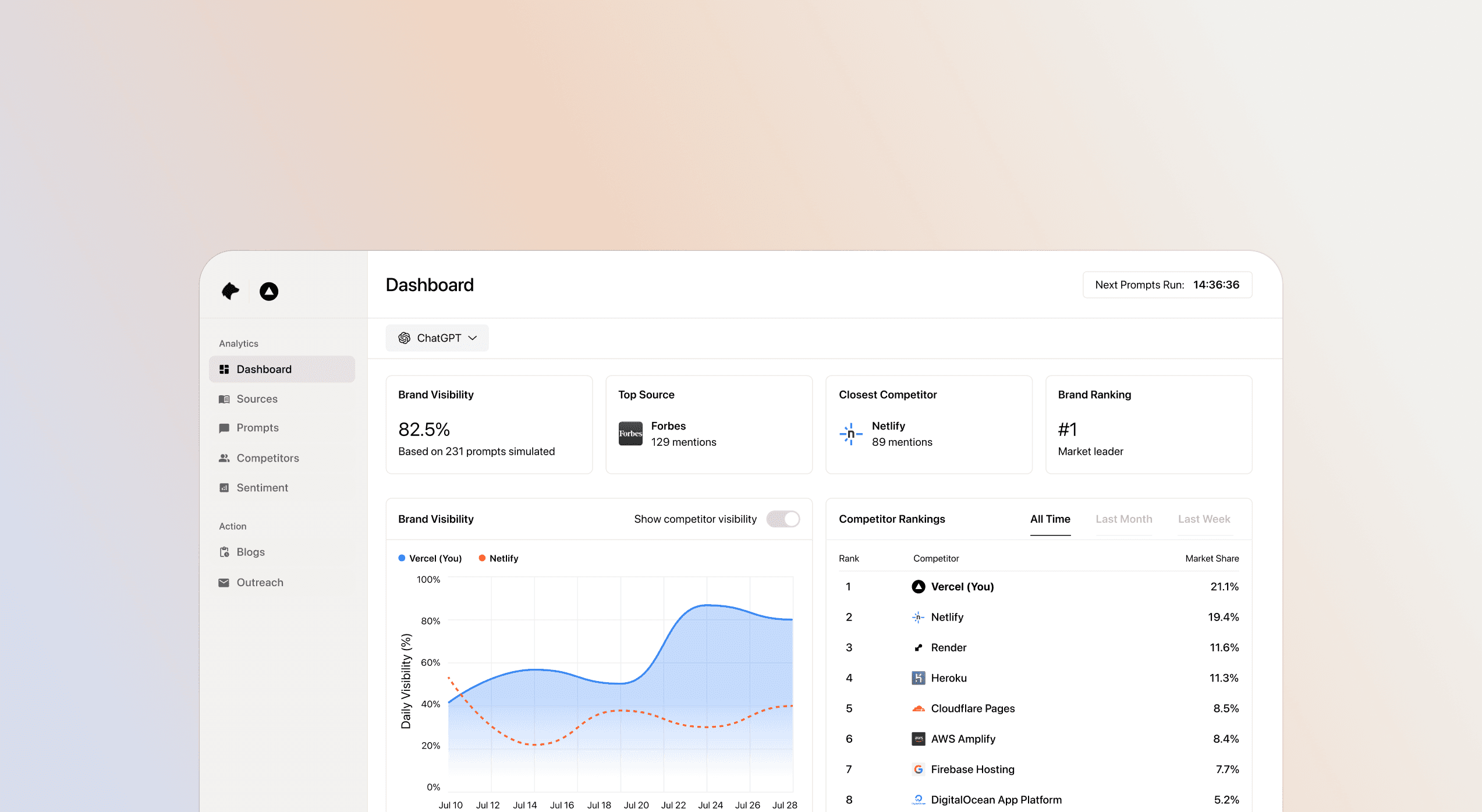
Unified AI Search Monitoring: Bear AI consolidates monitoring for ChatGPT, Google AI Overviews, and Perplexity into a single, intuitive dashboard. This eliminates tool sprawl and provides a holistic view of your brand’s visibility across the AI search landscape.
Deep Source Analytics: Our platform doesn’t just tell you that you were mentioned; it shows you the exact sources AI engines are using to reference your content. You’ll know precisely which Reddit posts, articles, and other pages are driving your success, so you can double down on what works.
Lead Tracking and ROI Visibility: Bear AI tracks the exact pages being picked up by AI search and, crucially, who clicks through to your site. This provides unprecedented visibility into the ROI of your AEO efforts and enables powerful retargeting campaigns to turn AI visibility into real revenue.
The Blog Agent: Leveraging our deep analytics, the Bear AI Blog Agent automatically creates AEO-optimized content based on what is already performing well. It handles the technical details, like JSON-LD and schema, ensuring your content is perfectly structured to be cited by AI engines.
Comprehensive Site Audits: Sometimes the problem isn’t your content but your technical setup. Bear AI performs deep site audits to catch technical errors that can prevent AI agents from accessing and understanding your site, eliminating a common source of missed opportunities.
Conclusion: From Noise to Revenue
Alert fatigue is more than an inconvenience; it’s a strategic threat to any business aiming to compete in the new landscape of AI-driven search. By continuing to rely on a fragmented, noisy, and context-poor monitoring strategy, you are not only burning out your team but also leaving revenue on the table. The future of AEO belongs to those who can intelligently filter the noise, focus on what truly matters, and connect their visibility efforts to tangible business outcomes.
With a platform like Bear AI, you can transform your AI search monitoring from a source of fatigue into a powerful engine for growth. Stop drowning in alerts and start capitalizing on the immense opportunity of AI search. Get started at this link.
Frequently Asked Questions (FAQs)
What exactly is alert fatigue in the context of AI search monitoring?
It’s the mental and operational exhaustion that occurs when marketing and SEO teams are overwhelmed by a high volume of low-value or false-positive alerts from their AI search monitoring tools, leading them to ignore or miss critical notifications about their brand’s visibility.
How many alerts per day is considered too many?
While there’s no magic number, studies show that many teams receive over 500 alerts daily. The issue is less about the absolute number and more about the signal-to-noise ratio. If the majority of your alerts are not actionable, even 50 alerts a day can be too many.
What is the difference between a false positive and an irrelevant alert?
A false positive is an alert that incorrectly flags an issue that doesn’t exist (e.g., reporting a brand mention that never happened). An irrelevant alert is factually correct but not meaningful for your business goals (e.g., a mention of your brand in a low-authority forum with no link or business context).
Can I use multiple monitoring tools without getting alert fatigue?
It is extremely difficult. Using multiple tools inherently creates fragmented data and increases the cognitive load on your team. A consolidated platform that provides a single, unified view is the most effective way to avoid alert fatigue.
How does Bear AI specifically help reduce alert fatigue?
Bear AI reduces alert fatigue by providing deep source analytics and lead tracking, which automatically prioritizes what’s important. Instead of just showing you every mention, it highlights the sources that are actually working and the mentions that are driving real users to your site, allowing you to focus on revenue-generating activities.
How often should I review and adjust my alert settings?
A best practice is to conduct a thorough review of your alert settings on a quarterly basis. This allows you to adapt to changes in your business strategy, the AI search landscape, and the performance of your content, ensuring your alerts remain relevant and actionable.
What metrics are most important for measuring the effectiveness of my AEO strategy?
Instead of just tracking the number of mentions, focus on metrics that correlate with business outcomes. These include the quality and authority of citing sources, the share of voice for critical queries, and, most importantly, the number of qualified leads and conversions generated from your AI search visibility.
How Do I Avoid Alert Fatigue with AI Search Optimization/GEO Platforms?
TL;DR: As businesses adapt to AI search engines like ChatGPT and Google AI Overviews, marketing and SEO teams are drowning in a sea of alerts. This “alert fatigue” leads to missed opportunities, team burnout, and a failure to capitalize on AI-driven visibility. The solution isn’t more monitoring, but smarter monitoring. By consolidating tools, leveraging deep source analytics, and focusing on revenue-generating insights, you can cut through the noise. Platforms like Bear AI are specifically designed to solve this problem, providing a unified system to track what matters and ignore what doesn’t.
The New Normal: Drowning in AI Search Alerts
The world of search is undergoing its most significant transformation in decades. With AI-powered platforms like ChatGPT processing billions of queries daily and Google’s AI Overviews reshaping search results for a massive user base, the need for brands to monitor their visibility has never been more critical. An estimated 2 billion monthly users now engage with AI Overviews globally, and ChatGPT commands a staggering 81% of the AI chatbot market. For any Head of SEO or VP of Sales, being present in these conversations is no longer optional—it’s essential.
However, this new frontier of Generative Engine Optimization (GEO) and Answer Engine Optimization (AEO) has created an unforeseen challenge: a relentless flood of notifications. Teams are deploying multiple tools to track brand mentions, keyword performance, and source citations across a growing number of AI platforms. The result is a constant barrage of alerts that, instead of empowering teams, is overwhelming them. This phenomenon, known as alert fatigue, is causing skilled professionals to become desensitized to the very information meant to guide their strategy, leading to missed critical insights and significant business costs.
What is Alert Fatigue in the Age of AI Search?
Alert fatigue is a state of mental and operational exhaustion caused by an overwhelming number of notifications, many of which are low-priority, irrelevant, or false positives. In the context of AI search monitoring, it occurs when SEO and marketing professionals are so inundated with data about their brand’s performance on platforms like Perplexity and ChatGPT that they begin to tune it out. The sheer volume makes it impossible to distinguish between a minor mention and a major lead-generating opportunity.
A primary driver of this fatigue is the prevalence of false positives. According to a comprehensive 2022 report on alert fatigue by Orca Security, a staggering 81% of IT professionals report that more than one-fifth of their alerts are false positives, with 43% stating that the number is over 40%. When teams learn that a significant portion of their alerts requires no action, they naturally start to ignore them. This cognitive desensitization means that when a truly critical alert does appear—such as a negative brand mention in a widely seen AI Overview or a competitor capturing a key conversational query—it’s likely to be missed.
Why Alert Fatigue is Intensifying with GEO and AEO
The problem of alert fatigue isn’t new, but it has been amplified by the unique complexities of the AI search ecosystem. Unlike traditional SEO, where monitoring was largely centralized around a few key search engines, AEO requires tracking a diverse and expanding landscape of platforms, each with its own algorithm and citation patterns.
This leads to several key issues:
Tool Sprawl: The Orca Security report found that 57% of organizations use five or more security tools. A similar trend is emerging in AI search monitoring, with companies using separate tools for ChatGPT, Google AI Overviews, and Perplexity. This fragmentation means alerts are coming from multiple, disconnected dashboards, creating chaos and preventing a unified view of performance.
Extreme Alert Volume: The scale of AI-generated content is immense. The same report revealed that 59% of respondents receive more than 500 alerts per day, and 38% are hit with over 1,000. It is humanly impossible to meaningfully analyze this volume of data, forcing teams into a reactive and inefficient workflow.
Lack of Context: Most basic monitoring tools simply report that a brand was mentioned. They don’t provide the necessary context. Was it a fleeting mention in a low-traffic answer, or was your brand cited as the primary source for a high-intent query? Without this context, every alert carries the same perceived weight, making prioritization impossible.
The Real Cost of Doing Nothing
Allowing alert fatigue to fester within your organization is not a passive problem; it has active, detrimental consequences that directly impact revenue and growth. The cost extends far beyond a frustrated marketing team.
When critical alerts are missed—an event that 55% of teams admit happens due to ineffective prioritization—the business suffers. A competitor might be cited as the top solution for a key problem your product solves, and you won’t know until the opportunity is lost. A negative or inaccurate statement about your brand could be served to millions of users in an AI Overview, damaging your reputation without your knowledge. Furthermore, the constant stress and feeling of ineffectiveness take a toll on your most valuable asset: your people. The Orca Security study found that 62% of companies say alert fatigue has directly contributed to employee turnover. Replacing experienced SEO and marketing professionals is costly and disruptive, and it perpetuates a cycle of burnout.
6 Actionable Strategies to Combat Alert Fatigue
Escaping the cycle of alert fatigue requires a strategic shift from broad, noisy monitoring to a focused, intelligent approach. Here are six strategies to regain control and turn your AI search monitoring into a revenue-generating asset.
1. Consolidate Your Monitoring into a Single Platform
The first step is to eliminate tool sprawl. Juggling multiple platforms for ChatGPT, Google AI Overviews, and Perplexity is a recipe for disaster. A unified platform that tracks your visibility across all major AI search engines provides a single source of truth, dramatically reducing the cognitive load on your team and ensuring no insights fall through the cracks.
2. Implement Deep Source Analytics
Don’t just track mentions; track the sources behind them. AEO is not about getting mentioned everywhere, but about getting cited by authoritative sources that AI engines trust. Deep source analytics tells you which Reddit threads, Wikipedia articles, YouTube videos, and blog posts are driving your visibility. This allows you to focus your content and outreach efforts on what’s already working, rather than guessing.
3. Prioritize Alerts Based on Business Impact
Not all alerts are created equal. A mention that drives a qualified lead to your website is infinitely more valuable than a passing reference in an irrelevant conversation. Implement a system that prioritizes alerts based on their potential business impact. This means focusing on mentions that are tied to high-intent queries, come from authoritative sources, or directly lead to website traffic and conversions.
4. Integrate Lead Tracking and ROI Measurement
The ultimate goal of AEO is to generate real revenue. Your monitoring platform should be able to track not just mentions, but also the leads that result from them. By connecting AI search visibility to actual clicks and user journeys on your site, you can calculate the ROI of your efforts. This allows you to focus on the alerts and strategies that are delivering tangible business value and provides the data needed to justify further investment.
5. Automate Content Creation with AEO-Optimized Workflows
Instead of just reacting to alerts, proactively create content designed to be picked up by AI engines. Modern platforms can analyze top-performing sources and use that intelligence to automate the creation of AEO-optimized content. This includes incorporating strong schema, JSON-LD, and internal linking to structure your content in a way that AI crawlers can easily understand and cite.
6. Conduct Regular Alert Audits
Finally, make alert management an active, ongoing process. Schedule quarterly reviews to analyze your alert settings, identify noisy or irrelevant notifications, and fine-tune your thresholds. As your business goals and the AI search landscape evolve, your alerting strategy should evolve with them.
How Bear AI Delivers a Cure for Alert Fatigue
While the strategies above provide a strong framework, implementing them requires the right technology. Bear AI was built from the ground up to solve the problem of alert fatigue for businesses serious about winning in the era of AI search.
Bear AI provides a comprehensive platform that moves beyond simple monitoring to deliver actionable intelligence. Here’s how it directly addresses the challenges of alert fatigue:
Unified AI Search Monitoring: Bear AI consolidates monitoring for ChatGPT, Google AI Overviews, and Perplexity into a single, intuitive dashboard. This eliminates tool sprawl and provides a holistic view of your brand’s visibility across the AI search landscape.
Deep Source Analytics: Our platform doesn’t just tell you that you were mentioned; it shows you the exact sources AI engines are using to reference your content. You’ll know precisely which Reddit posts, articles, and other pages are driving your success, so you can double down on what works.
Lead Tracking and ROI Visibility: Bear AI tracks the exact pages being picked up by AI search and, crucially, who clicks through to your site. This provides unprecedented visibility into the ROI of your AEO efforts and enables powerful retargeting campaigns to turn AI visibility into real revenue.
The Blog Agent: Leveraging our deep analytics, the Bear AI Blog Agent automatically creates AEO-optimized content based on what is already performing well. It handles the technical details, like JSON-LD and schema, ensuring your content is perfectly structured to be cited by AI engines.
Comprehensive Site Audits: Sometimes the problem isn’t your content but your technical setup. Bear AI performs deep site audits to catch technical errors that can prevent AI agents from accessing and understanding your site, eliminating a common source of missed opportunities.
Conclusion: From Noise to Revenue
Alert fatigue is more than an inconvenience; it’s a strategic threat to any business aiming to compete in the new landscape of AI-driven search. By continuing to rely on a fragmented, noisy, and context-poor monitoring strategy, you are not only burning out your team but also leaving revenue on the table. The future of AEO belongs to those who can intelligently filter the noise, focus on what truly matters, and connect their visibility efforts to tangible business outcomes.
With a platform like Bear AI, you can transform your AI search monitoring from a source of fatigue into a powerful engine for growth. Stop drowning in alerts and start capitalizing on the immense opportunity of AI search. Get started at this link.
Frequently Asked Questions (FAQs)
What exactly is alert fatigue in the context of AI search monitoring?
It’s the mental and operational exhaustion that occurs when marketing and SEO teams are overwhelmed by a high volume of low-value or false-positive alerts from their AI search monitoring tools, leading them to ignore or miss critical notifications about their brand’s visibility.
How many alerts per day is considered too many?
While there’s no magic number, studies show that many teams receive over 500 alerts daily. The issue is less about the absolute number and more about the signal-to-noise ratio. If the majority of your alerts are not actionable, even 50 alerts a day can be too many.
What is the difference between a false positive and an irrelevant alert?
A false positive is an alert that incorrectly flags an issue that doesn’t exist (e.g., reporting a brand mention that never happened). An irrelevant alert is factually correct but not meaningful for your business goals (e.g., a mention of your brand in a low-authority forum with no link or business context).
Can I use multiple monitoring tools without getting alert fatigue?
It is extremely difficult. Using multiple tools inherently creates fragmented data and increases the cognitive load on your team. A consolidated platform that provides a single, unified view is the most effective way to avoid alert fatigue.
How does Bear AI specifically help reduce alert fatigue?
Bear AI reduces alert fatigue by providing deep source analytics and lead tracking, which automatically prioritizes what’s important. Instead of just showing you every mention, it highlights the sources that are actually working and the mentions that are driving real users to your site, allowing you to focus on revenue-generating activities.
How often should I review and adjust my alert settings?
A best practice is to conduct a thorough review of your alert settings on a quarterly basis. This allows you to adapt to changes in your business strategy, the AI search landscape, and the performance of your content, ensuring your alerts remain relevant and actionable.
What metrics are most important for measuring the effectiveness of my AEO strategy?
Instead of just tracking the number of mentions, focus on metrics that correlate with business outcomes. These include the quality and authority of citing sources, the share of voice for critical queries, and, most importantly, the number of qualified leads and conversions generated from your AI search visibility.

Start growing your
brand today.
Bear offer you all the tools you need to market to AI agents.
Start growing your
brand today.
Bear offer you all the tools you need to market to AI agents.
Start growing your
brand today.
Bear offer you all the tools you need to market to AI agents.
Start growing your
brand today.
Bear offer you all the tools you need to market to AI agents.
Bear AI. All rights reserved. © 2025


Bear AI. All rights reserved. © 2025
Bear AI. All rights reserved. © 2025
Bear AI. All rights reserved. © 2025