Mar 12, 2026
Mar 12, 2026
Mar 12, 2026
The Best SaaS Tools to Rank Higher in ChatGPT
The Best SaaS Tools to Rank Higher in ChatGPT
The Best SaaS Tools to Rank Higher in ChatGPT

Siddhant Paliwal
CTO, Bear
In This Article
What “Ranking in ChatGPT” Actually Means
Comparison: Best SaaS Tools to Rank Higher in ChatGPT
Emerging Tools to Watch
Building Your AI Visibility Stack
Final Thoughts: Make Your Brand Answer-Worthy
Frequently Asked Questions
Share on
If the front page of the internet used to be Google, today it’s ChatGPT. Whether you’re asking for product recommendations, comparing software, or planning a trip, there’s a good chance your first stop is an AI chat, not a search engine.
That shift has quietly changed the rules of online visibility. Instead of optimizing for blue links, brands are now optimizing for answers. How they appear, or don’t appear, in AI-generated responses.
Enter a new stack of SaaS tools built to help companies “rank” in ChatGPT and other AI assistants. Here are some of the best tools leading the way.
What “Ranking in ChatGPT” Actually Means
ChatGPT doesn’t have a search results page. There’s no “position #1.” But there is a growing ecosystem of AI engines, including ChatGPT, Perplexity, Gemini, and Claude, that extract information from trusted web sources and summarize answers in natural language.
Visibility in this new environment depends on:
How well your brand or product is understood by AI models through structured data, mentions, and authority.
How much context and credibility your content provides.
Whether AI engines connect your brand to key topics and entities within their knowledge graphs.
This emerging discipline is called AEO (Answer Engine Optimization), and the following tools are helping brands master it.
Comparison: Best SaaS Tools to Rank Higher in ChatGPT
Tool | Primary Focus | Best For | Key Strengths |
|---|---|---|---|
Bear AI | AI visibility & AEO tracking | Marketing teams, digital agencies | Tracks brand presence in ChatGPT, Perplexity, Gemini; identifies content gaps; actionable optimization insights |
AthenaHQ | Entity management & structured data | Enterprise SEO/data teams | Enterprise-grade knowledge graph mapping, schema alignment, entity auditing |
Profound | AI mention monitoring | Competitive intelligence | Tracks where brands appear in AI-generated answers; benchmarks competitor visibility |
Clearscope / Surfer SEO | Content optimization | SEO writers, content teams | NLP-driven keyword and entity coverage, topic completeness, readability optimization |
MarketMuse | Topical authority & semantic coverage | Content strategists | Topic modeling, semantic gap analysis, content clustering |
Schema App | Schema implementation & validation | Technical SEO teams | Scalable structured data management, automated markup updates |
AnswerThePublic / AlsoAsked | Query discovery | Content marketing teams | Identifies natural-language questions and conversational phrasing |
Semrush / Ahrefs | Authority & backlink tracking | SEO and PR professionals | Domain authority tracking, link analysis, citation monitoring |
1. Bear AI: The AEO Platform Built for the AI-First Web
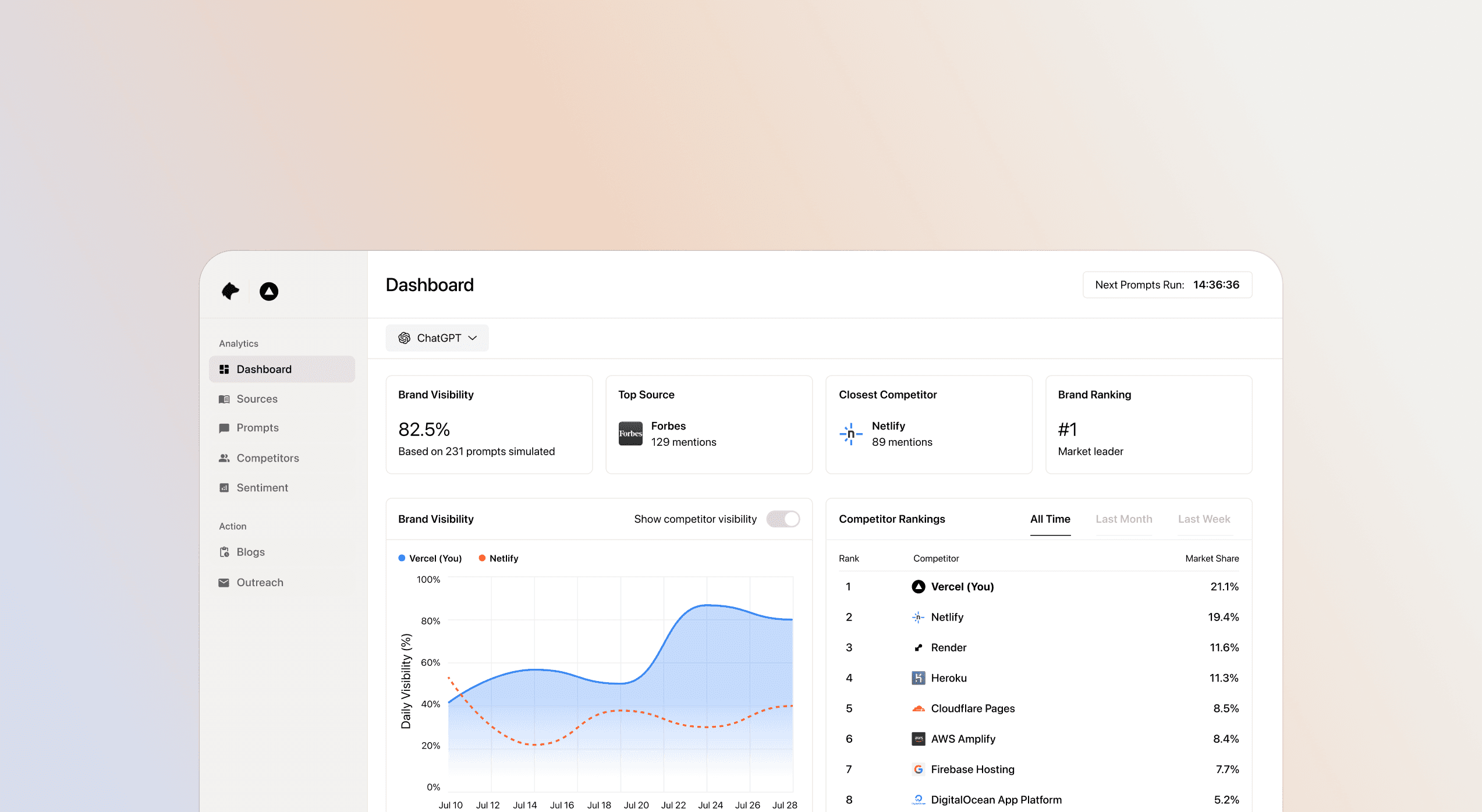
If SEO tools track your rankings on Google, Bear AI tracks your visibility in ChatGPT.
Bear helps you:
See where and how often your brand appears in AI-generated answers.
Identify missing entities or brand mentions across ChatGPT, Perplexity, and Gemini.
Discover optimization opportunities in structured data, brand descriptions, and topical coverage.
Unlike traditional SEO software, Bear is purpose-built for the AI ecosystem, providing visibility into how large language models perceive your brand today, and what signals you need to strengthen for tomorrow.
Think of it as Search Console for the AI era.
2. AthenaHQ: Enterprise Knowledge Graph and Entity Tracking
AthenaHQ focuses on the data layer behind AI visibility. Its platform maps your brand’s entity presence, structured data, and citations across the web to ensure AI systems understand who you are, what you do, and how you connect to key topics.
It’s especially popular with enterprise teams that want to:
Align product and brand entities across multiple domains.
Audit how AI engines interpret their organization’s knowledge graph.
Manage structured data at scale.
AthenaHQ is powerful but technical. It’s ideal for organizations with dedicated data or SEO engineering resources, and it pairs well with visibility tools like Bear for a complete AEO workflow.
3. Profound: AI Search Monitoring and Brand Mentions
Profound is another early entrant in the AI visibility space, focused on monitoring where brands appear across AI-generated responses.
It scans ChatGPT, Perplexity, and Google’s AI Overviews to identify:
When your brand or competitors are mentioned.
The context in which those mentions occur.
Shifts in sentiment or topic alignment.
Profound is especially useful for competitive benchmarking and trend analysis. However, it focuses more on detection than optimization. So while it tells you what AI engines are saying, it doesn’t always tell you how to improve it.
4. Clearscope and Surfer SEO: AI-Friendly Content Optimization
While not built specifically for ChatGPT, Clearscope and Surfer SEO remain essential for content optimization in an AI-driven landscape.
Both tools use NLP-driven keyword and entity modeling to help writers create content that’s semantically rich and contextually complete. Traits that large language models favor when generating answers.
They’re particularly valuable for:
Strengthening topical coverage.
Ensuring entity inclusion and context relevance.
Maintaining consistent metadata and readability.
If your content feels thin or disconnected, this is where you start.
5. MarketMuse: Topic Authority and Semantic Coverage
MarketMuse specializes in topic modeling and semantic depth. Its AI engine analyzes your content’s topic clusters and identifies subtopics that limit your topical authority.
In the AI era, “complete thought coverage” matters more than keyword density. ChatGPT rewards content that demonstrates a deep, interconnected understanding of a subject. MarketMuse helps you build that foundation.
6. Schema App: Structured Data Simplified
Schema App simplifies the process of implementing and maintaining structured data at scale.
AI systems rely on structured data to determine entities, relationships, and trustworthiness. If your schema is incomplete or inconsistent, AI engines may misinterpret your brand—or ignore it entirely.
Schema App automates and validates schema markup, ensuring that your structured data is clean, consistent, and aligned with best practices.
7. AnswerThePublic and AlsoAsked: Real Queries, Real Language
ChatGPT answers questions, not keywords. That’s why tools like AnswerThePublic and AlsoAsked are invaluable for uncovering real-world queries phrased in conversational language.
They help you:
Understand the natural-language questions users ask.
Create content formatted for answers rather than long-form articles.
Align your messaging with the way AI (and people) actually talk.
8. Semrush and Ahrefs: Authority Still Matters
Backlinks, citations, and authority are still foundational. AI models draw heavily from high-authority domains in their training and retrieval processes.
Tools like Semrush and Ahrefs remain critical for:
Monitoring backlinks and mentions.
Identifying authoritative citation opportunities.
Building the credibility that reinforces your brand’s entity strength.
The approach may be traditional, but the impact remains essential for AI-driven discovery.
Emerging Tools to Watch
A few other technologies are worth keeping an eye on:
Perplexity Pages tracking for brands building AI-optimized knowledge hubs.
AI citation monitors that detect when your content is referenced by AI systems.
Google AI Overviews metrics for tracking hybrid search and AI answer visibility.
The AEO ecosystem is expanding rapidly, and these early experiments are shaping what the next generation of tools will look like.
Building Your AI Visibility Stack
Improving ChatGPT visibility means combining several complementary layers:
Visibility tracking: Bear AI, Profound
Entity optimization: AthenaHQ, Schema App
Content depth: MarketMuse, Clearscope, Surfer
Authority building: Ahrefs, Semrush
Together, they help your brand evolve from simply being indexed to being understood. Because if Google was about being found, ChatGPT is about being trusted.
Final Thoughts: Make Your Brand Answer-Worthy
The age of “ranking in ChatGPT” is about earning trust in the AI layer of the web. That starts with understanding how large language models perceive your brand today.
If you want to see where you appear across AI engines and what it takes to show up more often, Bear AI gives you the visibility and insight to make it happen.
Frequently Asked Questions
1. Can you actually rank in ChatGPT?
Not in the “traditional” SEO sense. ChatGPT doesn’t have ranked search results, but brands can optimize their content and entities to appear more often in AI-generated answers, a process known as Answer Engine Optimization (AEO).
2. What are the best SaaS tools to rank higher in ChatGPT?
Top tools include Bear AI for AEO visibility, AthenaHQ for entity management, Profound for AI search monitoring, and supporting platforms like Clearscope, MarketMuse, and Schema App for content and structured data optimization.
3. Does traditional SEO still matter for ChatGPT visibility?
Yes. AI engines still rely on content from high-authority websites. Building backlinks, publishing authoritative content, and maintaining strong domain credibility all improve your brand’s likelihood of being cited by AI models.
4. How does structured data affect ChatGPT rankings?
Structured data helps AI engines understand who you are, what you do, and how your information relates to other entities. Implementing consistent schema markup makes your brand more recognizable and trustworthy to AI systems.
5. What’s the difference between SEO and AEO?SEO focuses on optimizing for search engines like Google. AEO (Answer Engine Optimization) focuses on optimizing for AI-driven platforms that generate direct answers, such as ChatGPT, Perplexity, and Gemini.
If the front page of the internet used to be Google, today it’s ChatGPT. Whether you’re asking for product recommendations, comparing software, or planning a trip, there’s a good chance your first stop is an AI chat, not a search engine.
That shift has quietly changed the rules of online visibility. Instead of optimizing for blue links, brands are now optimizing for answers. How they appear, or don’t appear, in AI-generated responses.
Enter a new stack of SaaS tools built to help companies “rank” in ChatGPT and other AI assistants. Here are some of the best tools leading the way.
What “Ranking in ChatGPT” Actually Means
ChatGPT doesn’t have a search results page. There’s no “position #1.” But there is a growing ecosystem of AI engines, including ChatGPT, Perplexity, Gemini, and Claude, that extract information from trusted web sources and summarize answers in natural language.
Visibility in this new environment depends on:
How well your brand or product is understood by AI models through structured data, mentions, and authority.
How much context and credibility your content provides.
Whether AI engines connect your brand to key topics and entities within their knowledge graphs.
This emerging discipline is called AEO (Answer Engine Optimization), and the following tools are helping brands master it.
Comparison: Best SaaS Tools to Rank Higher in ChatGPT
Tool | Primary Focus | Best For | Key Strengths |
|---|---|---|---|
Bear AI | AI visibility & AEO tracking | Marketing teams, digital agencies | Tracks brand presence in ChatGPT, Perplexity, Gemini; identifies content gaps; actionable optimization insights |
AthenaHQ | Entity management & structured data | Enterprise SEO/data teams | Enterprise-grade knowledge graph mapping, schema alignment, entity auditing |
Profound | AI mention monitoring | Competitive intelligence | Tracks where brands appear in AI-generated answers; benchmarks competitor visibility |
Clearscope / Surfer SEO | Content optimization | SEO writers, content teams | NLP-driven keyword and entity coverage, topic completeness, readability optimization |
MarketMuse | Topical authority & semantic coverage | Content strategists | Topic modeling, semantic gap analysis, content clustering |
Schema App | Schema implementation & validation | Technical SEO teams | Scalable structured data management, automated markup updates |
AnswerThePublic / AlsoAsked | Query discovery | Content marketing teams | Identifies natural-language questions and conversational phrasing |
Semrush / Ahrefs | Authority & backlink tracking | SEO and PR professionals | Domain authority tracking, link analysis, citation monitoring |
1. Bear AI: The AEO Platform Built for the AI-First Web
If SEO tools track your rankings on Google, Bear AI tracks your visibility in ChatGPT.
Bear helps you:
See where and how often your brand appears in AI-generated answers.
Identify missing entities or brand mentions across ChatGPT, Perplexity, and Gemini.
Discover optimization opportunities in structured data, brand descriptions, and topical coverage.
Unlike traditional SEO software, Bear is purpose-built for the AI ecosystem, providing visibility into how large language models perceive your brand today, and what signals you need to strengthen for tomorrow.
Think of it as Search Console for the AI era.
2. AthenaHQ: Enterprise Knowledge Graph and Entity Tracking
AthenaHQ focuses on the data layer behind AI visibility. Its platform maps your brand’s entity presence, structured data, and citations across the web to ensure AI systems understand who you are, what you do, and how you connect to key topics.
It’s especially popular with enterprise teams that want to:
Align product and brand entities across multiple domains.
Audit how AI engines interpret their organization’s knowledge graph.
Manage structured data at scale.
AthenaHQ is powerful but technical. It’s ideal for organizations with dedicated data or SEO engineering resources, and it pairs well with visibility tools like Bear for a complete AEO workflow.
3. Profound: AI Search Monitoring and Brand Mentions
Profound is another early entrant in the AI visibility space, focused on monitoring where brands appear across AI-generated responses.
It scans ChatGPT, Perplexity, and Google’s AI Overviews to identify:
When your brand or competitors are mentioned.
The context in which those mentions occur.
Shifts in sentiment or topic alignment.
Profound is especially useful for competitive benchmarking and trend analysis. However, it focuses more on detection than optimization. So while it tells you what AI engines are saying, it doesn’t always tell you how to improve it.
4. Clearscope and Surfer SEO: AI-Friendly Content Optimization
While not built specifically for ChatGPT, Clearscope and Surfer SEO remain essential for content optimization in an AI-driven landscape.
Both tools use NLP-driven keyword and entity modeling to help writers create content that’s semantically rich and contextually complete. Traits that large language models favor when generating answers.
They’re particularly valuable for:
Strengthening topical coverage.
Ensuring entity inclusion and context relevance.
Maintaining consistent metadata and readability.
If your content feels thin or disconnected, this is where you start.
5. MarketMuse: Topic Authority and Semantic Coverage
MarketMuse specializes in topic modeling and semantic depth. Its AI engine analyzes your content’s topic clusters and identifies subtopics that limit your topical authority.
In the AI era, “complete thought coverage” matters more than keyword density. ChatGPT rewards content that demonstrates a deep, interconnected understanding of a subject. MarketMuse helps you build that foundation.
6. Schema App: Structured Data Simplified
Schema App simplifies the process of implementing and maintaining structured data at scale.
AI systems rely on structured data to determine entities, relationships, and trustworthiness. If your schema is incomplete or inconsistent, AI engines may misinterpret your brand—or ignore it entirely.
Schema App automates and validates schema markup, ensuring that your structured data is clean, consistent, and aligned with best practices.
7. AnswerThePublic and AlsoAsked: Real Queries, Real Language
ChatGPT answers questions, not keywords. That’s why tools like AnswerThePublic and AlsoAsked are invaluable for uncovering real-world queries phrased in conversational language.
They help you:
Understand the natural-language questions users ask.
Create content formatted for answers rather than long-form articles.
Align your messaging with the way AI (and people) actually talk.
8. Semrush and Ahrefs: Authority Still Matters
Backlinks, citations, and authority are still foundational. AI models draw heavily from high-authority domains in their training and retrieval processes.
Tools like Semrush and Ahrefs remain critical for:
Monitoring backlinks and mentions.
Identifying authoritative citation opportunities.
Building the credibility that reinforces your brand’s entity strength.
The approach may be traditional, but the impact remains essential for AI-driven discovery.
Emerging Tools to Watch
A few other technologies are worth keeping an eye on:
Perplexity Pages tracking for brands building AI-optimized knowledge hubs.
AI citation monitors that detect when your content is referenced by AI systems.
Google AI Overviews metrics for tracking hybrid search and AI answer visibility.
The AEO ecosystem is expanding rapidly, and these early experiments are shaping what the next generation of tools will look like.
Building Your AI Visibility Stack
Improving ChatGPT visibility means combining several complementary layers:
Visibility tracking: Bear AI, Profound
Entity optimization: AthenaHQ, Schema App
Content depth: MarketMuse, Clearscope, Surfer
Authority building: Ahrefs, Semrush
Together, they help your brand evolve from simply being indexed to being understood. Because if Google was about being found, ChatGPT is about being trusted.
Final Thoughts: Make Your Brand Answer-Worthy
The age of “ranking in ChatGPT” is about earning trust in the AI layer of the web. That starts with understanding how large language models perceive your brand today.
If you want to see where you appear across AI engines and what it takes to show up more often, Bear AI gives you the visibility and insight to make it happen.
Frequently Asked Questions
1. Can you actually rank in ChatGPT?
Not in the “traditional” SEO sense. ChatGPT doesn’t have ranked search results, but brands can optimize their content and entities to appear more often in AI-generated answers, a process known as Answer Engine Optimization (AEO).
2. What are the best SaaS tools to rank higher in ChatGPT?
Top tools include Bear AI for AEO visibility, AthenaHQ for entity management, Profound for AI search monitoring, and supporting platforms like Clearscope, MarketMuse, and Schema App for content and structured data optimization.
3. Does traditional SEO still matter for ChatGPT visibility?
Yes. AI engines still rely on content from high-authority websites. Building backlinks, publishing authoritative content, and maintaining strong domain credibility all improve your brand’s likelihood of being cited by AI models.
4. How does structured data affect ChatGPT rankings?
Structured data helps AI engines understand who you are, what you do, and how your information relates to other entities. Implementing consistent schema markup makes your brand more recognizable and trustworthy to AI systems.
5. What’s the difference between SEO and AEO?SEO focuses on optimizing for search engines like Google. AEO (Answer Engine Optimization) focuses on optimizing for AI-driven platforms that generate direct answers, such as ChatGPT, Perplexity, and Gemini.

Start growing your
brand today.
Bear offer you all the tools you need to market to AI agents.
Start growing your
brand today.
Bear offer you all the tools you need to market to AI agents.
Start growing your
brand today.
Bear offer you all the tools you need to market to AI agents.
Start growing your
brand today.
Bear offer you all the tools you need to market to AI agents.
Bear AI. All rights reserved. © 2025


Bear AI. All rights reserved. © 2025
Bear AI. All rights reserved. © 2025
Bear AI. All rights reserved. © 2025