Dec 5, 2025
Dec 5, 2025
Dec 5, 2025
The Best AI Tools for B2B Marketing Teams in 2026
The Best AI Tools for B2B Marketing Teams in 2026
The Best AI Tools for B2B Marketing Teams in 2026

Siddhant Paliwal
CTO, Bear
In This Article
AI Tools For B2B Marketing: Lessons From 2025
How AI Is Impacting B2B Marketing
Top AI Tools for B2B Marketing Teams In 2026
Implementing AI Tools in 2026
FAQ
Share on
AI adoption has reached every industry around the globe, and 2025 has been a year highly impacted by the implementation of AI-powered technologies in B2B marketing.
According to a recent study, 45% of B2B marketers worldwide are planning to invest in AI-powered marketing tools by 2026. But, as a marketer or entrepreneur, you’re probably asking: which AI tools really help your business grow?
After a 2025 filled with trial and error for many marketing firms, we’ve been researching which AI tools are worth betting on. Here’s what you need to know about the best AI tools for B2B marketing in 2026.
AI Tools For B2B Marketing: Lessons From 2025
Before we get into the best AI tools for B2B marketing teams in 2026, it’s worth taking a moment to look back at the major lessons and shifts we experienced over the past year.
2025 was a year when many AI-driven marketing strategies proved far less effective than expected (you can blame the hype for that). Paradoxically, it was also the year when a number of companies scaled exponentially thanks to smart, targeted use of AI.
It was the season when powerful new AI startups emerged, while traditional marketing companies adjusted, incorporating AI features and strategies. At the same time, some brands fell behind entirely or quickly lost relevance in their markets.
There’s no perfect formula, but a few truths hold steady: your judgment and your understanding of the market remain essential. They’re what ultimately help you determine which tools are worth your time and how to use them strategically so you’re not just reacting to the AI boom.
How AI Is Impacting B2B Marketing
For many companies, the real breakthrough has come from understanding how AI can strengthen their operations and knowing which tools (and combinations of tools) deliver the strongest results.
Beyond frontier AI models like Gemini, ChatGPT, and Perplexity, a new wave of AI-powered platforms is offering more specialized, marketing-focused solutions. These are the main key areas where AI has made the biggest impact on B2B strategies in recent months:
Content Creation: The right AI tools can help startups and growing businesses accomplish in weeks what used to take months or even years through traditional methods. When used strategically, AI systems can produce high-quality content that attracts qualifying leads.
Automation: All the repetitive and time-consuming work can now be handled by AI. With the right setup, tasks like data cleaning, reporting, data entry, and routing become far simpler to optimize, freeing teams to focus on higher-impact initiatives.
Personalization: We’ve officially entered the era of hyper-personalized experiences across multiple channels without overwhelming your team. AI makes it easier to craft tailored messages based on real-time data, helping brands reach the right audience and connect in ways that weren’t possible before.
Data Intelligence: Advanced AI tools now give you the ability to make smarter decisions, in real time. Systems capable of processing massive datasets deliver insights within seconds and are accessible from any device you already use.
Understanding how AI can support your business is what empowers you to choose the tools that truly fit your brand.
Top AI Tools for B2B Marketing Teams In 2026
When it comes to B2B marketing, the trend in AI adoption is clear: teams are leaning into a strategic blend of traditional platforms that now include AI-driven features, along with newer, AI-native tools built specifically for modern marketing needs.
There are thousands of options out there, but these are some of the strongest examples of AI tools leading B2B marketing teams in 2026:
Bear AI
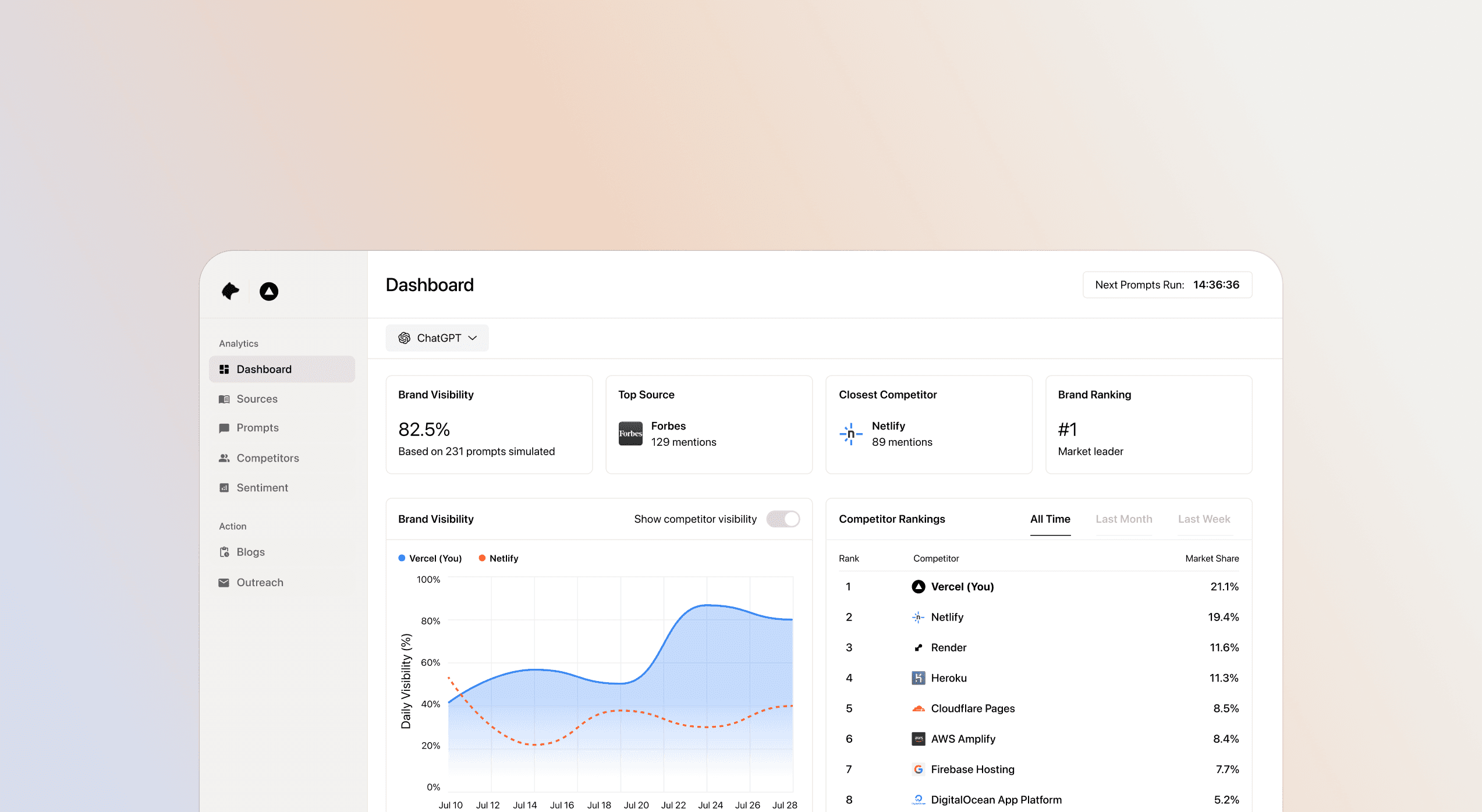
This platform, which emerged during the generative-AI wave, has been designed to help companies improve their visibility across frontier AI systems such as ChatGPT, Claude, and Perplexity. Bear AI focuses on optimizing a brand’s presence to build trust and authority.
Its platform includes AI-powered features like a blog-writing agent that helps brands produce Generative Engine Optimized (GEO) content to earn AI mentions and citations across LLMs and AI search systems.
Ideal for: Startups looking to accelerate brand visibility across both search engines and LLM ecosystems, while actively monitoring AI-driven mentions and citations.
HubSpot AI Breeze
HubSpot has been a major player in the market for almost 20 years, consistently adapting to new trends and integrating emerging technologies. Its latest AI capability, Breeze, is an integrated AI assistant that helps manage tasks, build workflows, and combine HubSpot’s features smoothly so that you can focus on strategy and results.
Its latest AI tools help teams grow by streamlining everything from social media and sales outreach to content creation, reporting, and workflow management.
Ideal for: Marketing teams already familiar with HubSpot’s CRM platform and Marketing Hub, and teams that prefer all-in-one systems.
Canva
Since launching Magic Studio, Canva has become an even more powerful design platform, helping companies elevate their brand style across multiple digital channels. Its AI-powered features make it easy to generate quick designs and ready-to-use marketing products that perform well across different formats and platforms.
Ideal for: Small marketing teams that need frequent, consistent creative output and don’t have a full in-house design department.
Salesforce
The cloud-based, legacy giant has also evolved for the AI era. Salesforce recently introduced Einstein Copilot, an AI assistant that works across the Salesforce ecosystem to deliver predictive scoring, recommend next-best actions, and support natural, conversational interactions that help users find fast, accurate solutions.
Ideal for: Small startups and large companies with complex sales systems.
HeyGen
This AI avatar generator allows brands to create videos in multiple languages in just a few minutes. You can use this platform to create professional, polished videos for lead generation, customer education, and personalized outreach, often at a scale that would be impossible with traditional production.
Ideal for: Brands that want creative and personalized video outreach and need to produce content efficiently.
Zapier
This automation platform helps brands connect web-based apps, streamline processes, and eliminate repetitive tasks without any technical knowledge. Zapier’s software now includes AI capabilities such as custom AI agents for handling specific tasks, AI-generated chatbots for customer interactions, and integrations with other AI systems through the Model Context Protocol (MCP).
Ideal for: Marketing teams managing multiple workflows across different platforms and looking to eliminate manual data entry.
AI Tools | Key Features | Ideal For |
|---|---|---|
Bear AI |
| Startups building brand presence in LLM ecosystems |
HubSpot AI Breeze |
| Teams using HubSpot CRM seeking all-in-one solutions |
Canva |
| Small teams needing frequent creative output without designers |
Salesforce |
| Startups and enterprises with complex sales systems |
HeyGen |
| Brands scaling video content production efficiently |
Zapier |
| Teams managing multi-platform workflows and reducing manual tasks |
Implementing AI Tools in 2026
Choosing the best AI tools for your marketing team will depend on a custom equation where you'll need to consider your company's challenges and the skills and talent you already have on board, as well as the real improvement opportunities that AI systems can deliver.
Your investment will go beyond what these platforms charge for their services (which varies depending on different plans and pricing models, and many offer trials and freemium versions). What really matters is the impact these tools can deliver: the results, efficiencies, and conversions they help you achieve.
Building AI-friendly processes may be one of the biggest keys to scaling in 2026. AI tools are reshaping B2B marketing and redefining the future of how businesses grow.
FAQ
What are the top AI trends that are revolutionizing B2B sales?
The biggest generative AI impacts on B2B sales are happening in automation, personalization, data intelligence, and content creation. AI-powered platforms help reduce time and costs on repetitive tasks, enable highly personalized outreach to companies and prospects, and generate high-quality content that accelerates growth and increases your AI visibility across search and LLM systems.
How do I know if an AI tool is actually working?
The best way to know the impact of any new system is to measure it. After implementing a new AI tool, compare your before-and-after metrics. Look closely at conversions, output quality, time saved, and any improvements in workflow efficiency. The data will tell you whether the tool is delivering real value.
What is the best AI tool for B2B marketing right now?
The best AI tool for your B2B marketing strategy will depend on your business needs, challenges, and market. Some platforms can cover many aspects of a workflow or marketing strategy, but sometimes AI tools that focus on certain areas can drive better results. For example, if your startup needs content and to gain relevance online, a platform like Bear AI can help you increase AI visibility and optimize your online presence.
Where should a small B2B startup begin with AI?
When it comes to the adoption and integration of AI tools, B2B startups usually need to accelerate content creation to build trust and authority online (platforms like Bear AI become essential for this process), and make smart decisions based on data analysis and market trends to remain relevant and thrive in competitive environments.
AI adoption has reached every industry around the globe, and 2025 has been a year highly impacted by the implementation of AI-powered technologies in B2B marketing.
According to a recent study, 45% of B2B marketers worldwide are planning to invest in AI-powered marketing tools by 2026. But, as a marketer or entrepreneur, you’re probably asking: which AI tools really help your business grow?
After a 2025 filled with trial and error for many marketing firms, we’ve been researching which AI tools are worth betting on. Here’s what you need to know about the best AI tools for B2B marketing in 2026.
AI Tools For B2B Marketing: Lessons From 2025
Before we get into the best AI tools for B2B marketing teams in 2026, it’s worth taking a moment to look back at the major lessons and shifts we experienced over the past year.
2025 was a year when many AI-driven marketing strategies proved far less effective than expected (you can blame the hype for that). Paradoxically, it was also the year when a number of companies scaled exponentially thanks to smart, targeted use of AI.
It was the season when powerful new AI startups emerged, while traditional marketing companies adjusted, incorporating AI features and strategies. At the same time, some brands fell behind entirely or quickly lost relevance in their markets.
There’s no perfect formula, but a few truths hold steady: your judgment and your understanding of the market remain essential. They’re what ultimately help you determine which tools are worth your time and how to use them strategically so you’re not just reacting to the AI boom.
How AI Is Impacting B2B Marketing
For many companies, the real breakthrough has come from understanding how AI can strengthen their operations and knowing which tools (and combinations of tools) deliver the strongest results.
Beyond frontier AI models like Gemini, ChatGPT, and Perplexity, a new wave of AI-powered platforms is offering more specialized, marketing-focused solutions. These are the main key areas where AI has made the biggest impact on B2B strategies in recent months:
Content Creation: The right AI tools can help startups and growing businesses accomplish in weeks what used to take months or even years through traditional methods. When used strategically, AI systems can produce high-quality content that attracts qualifying leads.
Automation: All the repetitive and time-consuming work can now be handled by AI. With the right setup, tasks like data cleaning, reporting, data entry, and routing become far simpler to optimize, freeing teams to focus on higher-impact initiatives.
Personalization: We’ve officially entered the era of hyper-personalized experiences across multiple channels without overwhelming your team. AI makes it easier to craft tailored messages based on real-time data, helping brands reach the right audience and connect in ways that weren’t possible before.
Data Intelligence: Advanced AI tools now give you the ability to make smarter decisions, in real time. Systems capable of processing massive datasets deliver insights within seconds and are accessible from any device you already use.
Understanding how AI can support your business is what empowers you to choose the tools that truly fit your brand.
Top AI Tools for B2B Marketing Teams In 2026
When it comes to B2B marketing, the trend in AI adoption is clear: teams are leaning into a strategic blend of traditional platforms that now include AI-driven features, along with newer, AI-native tools built specifically for modern marketing needs.
There are thousands of options out there, but these are some of the strongest examples of AI tools leading B2B marketing teams in 2026:
Bear AI
This platform, which emerged during the generative-AI wave, has been designed to help companies improve their visibility across frontier AI systems such as ChatGPT, Claude, and Perplexity. Bear AI focuses on optimizing a brand’s presence to build trust and authority.
Its platform includes AI-powered features like a blog-writing agent that helps brands produce Generative Engine Optimized (GEO) content to earn AI mentions and citations across LLMs and AI search systems.
Ideal for: Startups looking to accelerate brand visibility across both search engines and LLM ecosystems, while actively monitoring AI-driven mentions and citations.
HubSpot AI Breeze
HubSpot has been a major player in the market for almost 20 years, consistently adapting to new trends and integrating emerging technologies. Its latest AI capability, Breeze, is an integrated AI assistant that helps manage tasks, build workflows, and combine HubSpot’s features smoothly so that you can focus on strategy and results.
Its latest AI tools help teams grow by streamlining everything from social media and sales outreach to content creation, reporting, and workflow management.
Ideal for: Marketing teams already familiar with HubSpot’s CRM platform and Marketing Hub, and teams that prefer all-in-one systems.
Canva
Since launching Magic Studio, Canva has become an even more powerful design platform, helping companies elevate their brand style across multiple digital channels. Its AI-powered features make it easy to generate quick designs and ready-to-use marketing products that perform well across different formats and platforms.
Ideal for: Small marketing teams that need frequent, consistent creative output and don’t have a full in-house design department.
Salesforce
The cloud-based, legacy giant has also evolved for the AI era. Salesforce recently introduced Einstein Copilot, an AI assistant that works across the Salesforce ecosystem to deliver predictive scoring, recommend next-best actions, and support natural, conversational interactions that help users find fast, accurate solutions.
Ideal for: Small startups and large companies with complex sales systems.
HeyGen
This AI avatar generator allows brands to create videos in multiple languages in just a few minutes. You can use this platform to create professional, polished videos for lead generation, customer education, and personalized outreach, often at a scale that would be impossible with traditional production.
Ideal for: Brands that want creative and personalized video outreach and need to produce content efficiently.
Zapier
This automation platform helps brands connect web-based apps, streamline processes, and eliminate repetitive tasks without any technical knowledge. Zapier’s software now includes AI capabilities such as custom AI agents for handling specific tasks, AI-generated chatbots for customer interactions, and integrations with other AI systems through the Model Context Protocol (MCP).
Ideal for: Marketing teams managing multiple workflows across different platforms and looking to eliminate manual data entry.
AI Tools | Key Features | Ideal For |
|---|---|---|
Bear AI |
| Startups building brand presence in LLM ecosystems |
HubSpot AI Breeze |
| Teams using HubSpot CRM seeking all-in-one solutions |
Canva |
| Small teams needing frequent creative output without designers |
Salesforce |
| Startups and enterprises with complex sales systems |
HeyGen |
| Brands scaling video content production efficiently |
Zapier |
| Teams managing multi-platform workflows and reducing manual tasks |
Implementing AI Tools in 2026
Choosing the best AI tools for your marketing team will depend on a custom equation where you'll need to consider your company's challenges and the skills and talent you already have on board, as well as the real improvement opportunities that AI systems can deliver.
Your investment will go beyond what these platforms charge for their services (which varies depending on different plans and pricing models, and many offer trials and freemium versions). What really matters is the impact these tools can deliver: the results, efficiencies, and conversions they help you achieve.
Building AI-friendly processes may be one of the biggest keys to scaling in 2026. AI tools are reshaping B2B marketing and redefining the future of how businesses grow.
FAQ
What are the top AI trends that are revolutionizing B2B sales?
The biggest generative AI impacts on B2B sales are happening in automation, personalization, data intelligence, and content creation. AI-powered platforms help reduce time and costs on repetitive tasks, enable highly personalized outreach to companies and prospects, and generate high-quality content that accelerates growth and increases your AI visibility across search and LLM systems.
How do I know if an AI tool is actually working?
The best way to know the impact of any new system is to measure it. After implementing a new AI tool, compare your before-and-after metrics. Look closely at conversions, output quality, time saved, and any improvements in workflow efficiency. The data will tell you whether the tool is delivering real value.
What is the best AI tool for B2B marketing right now?
The best AI tool for your B2B marketing strategy will depend on your business needs, challenges, and market. Some platforms can cover many aspects of a workflow or marketing strategy, but sometimes AI tools that focus on certain areas can drive better results. For example, if your startup needs content and to gain relevance online, a platform like Bear AI can help you increase AI visibility and optimize your online presence.
Where should a small B2B startup begin with AI?
When it comes to the adoption and integration of AI tools, B2B startups usually need to accelerate content creation to build trust and authority online (platforms like Bear AI become essential for this process), and make smart decisions based on data analysis and market trends to remain relevant and thrive in competitive environments.

Start growing your
brand today.
Bear offer you all the tools you need to market to AI agents.
Start growing your
brand today.
Bear offer you all the tools you need to market to AI agents.
Start growing your
brand today.
Bear offer you all the tools you need to market to AI agents.
Start growing your
brand today.
Bear offer you all the tools you need to market to AI agents.
Bear AI. All rights reserved. © 2025


Bear AI. All rights reserved. © 2025
Bear AI. All rights reserved. © 2025
Bear AI. All rights reserved. © 2025